
NEW EXCITING WEBINAR – MAY 19 – 10.00-11.00 (CEST)
The art of Green Chemistry for Bioplastics and Public Procurement as a way forward
Föranmälan till webbinariet är nu över!
Men eftersom eventet är gratis kan du använda den här länken för se det ändå, med start 19 maj, 10.00:
https://us06web.zoom.us/j/87965963058
Green Chemistry has been the guide to a Holy Grail for many clean tech companies and R&D-departments around the world. Bioplastics is also a significant part of the Green Chemistry, and according to one of the founders, John Warner, there are no technical limits for manufacturing truly sustainable plastics according to the 12 principles for Green Chemistry.
- Prevention:
Preventing waste is better than treating or cleaning up waste after it is created. - Atom economy:
Synthetic methods should try to maximize the incorporation of all materials used in the process into the final product. This means that less waste will be generated as a result. - Less hazardous chemical syntheses:
Synthetic methods should avoid using or generating substances toxic to humans and/or the environment. - Designing safer chemicals:
Chemical products should be designed to achieve their desired function while being as non-toxic as possible. - Safer solvents and auxiliaries:
Auxiliary substances should be avoided wherever possible, and as non-hazardous as possible when they must be used. - Design for energy efficiency:
Energy requirements should be minimized, and processes should be conducted at ambient temperature and pressure whenever possible. - Use of renewable feedstocks:
Whenever it is practical to do so, renewable feedstocks or raw materials are preferable to non-renewable ones. - Reduce derivatives:
Unnecessary generation of derivatives—such as the use of protecting groups—should be minimized or avoided if possible; such steps require additional reagents and may generate additional waste. - Catalysis:
Catalytic reagents that can be used in small quantities to repeat a reaction are superior to stoichiometric reagents (ones that are consumed in a reaction). - Design for degradation:
Chemical products should be designed so that they do not pollute the environment; when their function is complete, they should break down into non-harmful products. - Real-time analysis for pollution prevention:
Analytical methodologies need to be further developed to permit real-time, in-process monitoring and control before hazardous substances form. - Inherently safer chemistry for accident prevention:
Whenever possible, the substances in a process, and the forms of those substances, should be chosen to minimize risks such as explosions, fires, and accidental releases.
Public Procurement is also one of the most important drivers for green market penetration. This has also been underlined in the Bioeconomic Strategy that has been written by the European Commission regarding materials as bioplastics. Anders Wijkman is involved in several international sustainability projects and was the main author for a Swedish Government Official Report on how to improve the Public Procurement as a better tool for serving the societal needs.
The webinar runs for approximately one hour between 10:00 and 11:00 on May 19, 2026.
You are welcome to attend completely free of charge!
Note: You register further down the page.
Speakers:
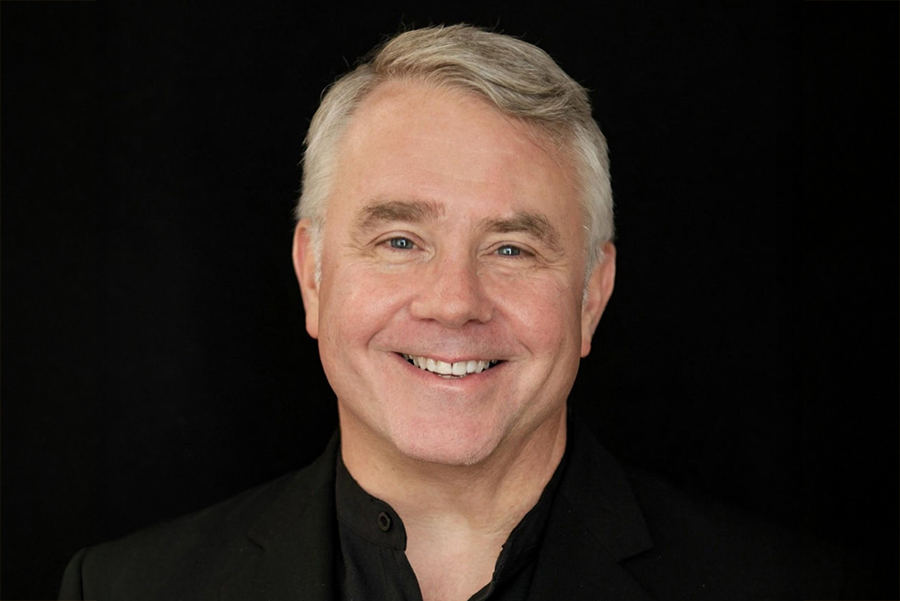
John Charles Warner
An American chemist, educator, and entrepreneur
John is best known as one of the founders of the field of green chemistry. Warner worked in industry for nearly a decade as a researcher at Polaroid Corporation, before moving to academia where he worked in various positions at University of Massachusetts Boston and Lowell for 12 years.
Now, Warner is CEO and CTO at Technology Greenhouse, as well as co-founder of Beyond Benign. With over 350 patents, he has created technologies for dozens of companies. Several companies have been created based on his inventions. He is the recipient of the 2014 Perkin Medal, widely acknowledged as the highest honor in American industrial chemistry.
Johns presentation is ”Bioplastics Without Limits: Aligning Innovation and Regulation”

Anders Wijkman
A Swedish opinionmaker and author
Anders is Honorary President of the Club of Rome, Chairman of Viable Cities and Member of the International Resource Panel. He has served as a Member of the European Parliament, as Assistant Secretary-General of the United Nations and Policy Director of UNDP, as Secretary General of the Swedish Red Cross, as Secretary General of the Swedish Society for Nature Conservation and as Director General of SAREC (the Swedish Agency for Research Cooperation with Developing Countries). In 2015-2016 Anders chaired the Swedish Cross-Party Committee on Environmental Objectives, whose main task was to develop a long-term climate strategy for Sweden. The proposal was turned into law in June 2017.
Anders is a member of the Swedish Royal Academy of Sciences, the World Academy of Art and Sceinces and the World Future Council . Anders is honorary doctor at Linköping University(2011).
During 2015 Anders published the report – ”The social benefits of moving towards a Circular Economy” – on the request of the Club of Rome. The main conclusions are that serious decoupling, in the form of a circular economy, will bring significant benefits to society – primarily in the form of lower carbon emissions and gains in employment. In 2012 Anders launched ”Bankrupting Nature” – with co-author Professor Johan Rockström. The book was published by Routledge. In 2018 he was co-authoring “Come On!” with Ernst v Weisszäcker, published by Springer. In 2019 he was co-authoring “A Finer Future” with Hunetr Lovins, Stewart Wallis and John Fullerton.
He is a Member of the World Future Council.
Anders will talk about ”Can cities use procurement policy to give prio to bio-plastics.”